Wednesday, 16 September 2026

Harry Winser.com

Musings on tech, photography, and culture

GameCube at 25

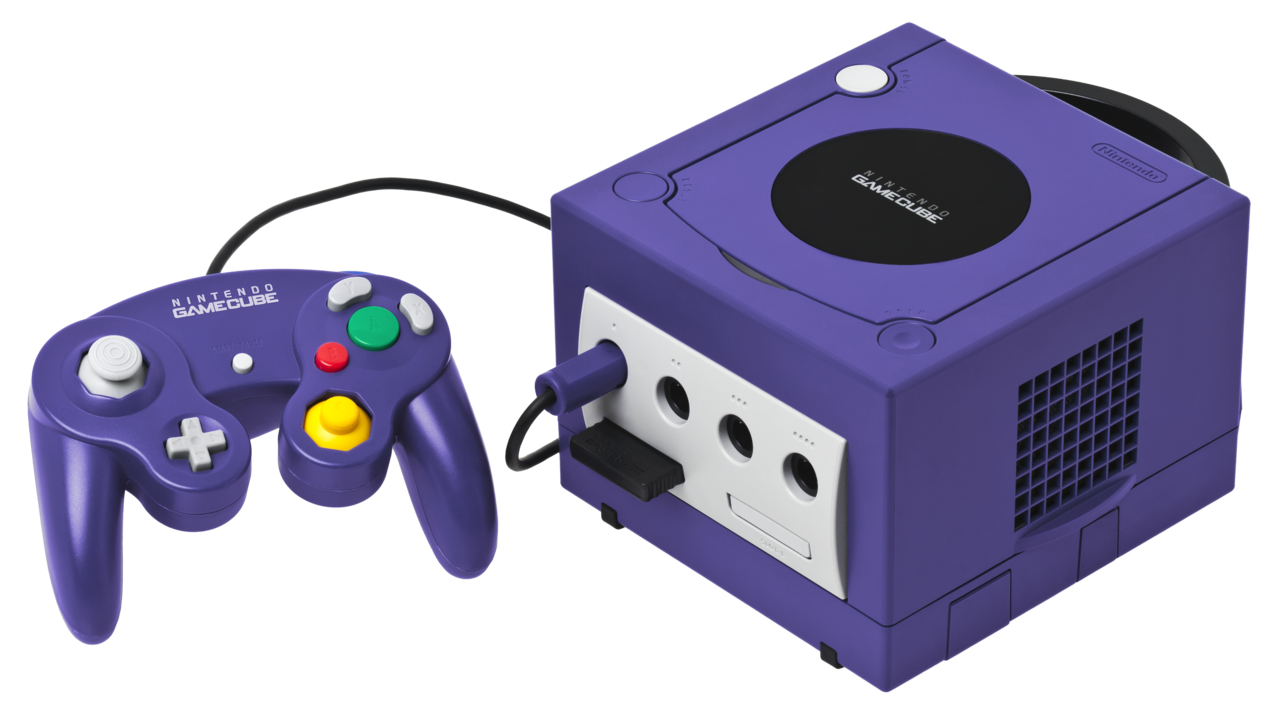
The Nintendo GameCube at 25 - a look back at the plucky purple cube

This week marks the Nintendo GameCube’s 25th* birthday! It was the first games console I fully owned, and it’s the one I probably have the fondest memories of. I was the only one of my friends to have one, and loved it until the Wii replaced it a number of years later. I’d spend hours playing The Legend of Zelda: The Wind Waker, Harvest Moon: A Wonderful Life, and Star Fox Adventures.

Nintendo GameCube with controller

Looking back, the GameCube made little sense. It had more graphical muscle than the PS2 yet didn’t end up getting the “big” games of its generation (such as GTA: San Andreas). It had a carrying handle, yet was a home console (were we supposed to pack it up and its cables to go on holiday with it?) It had tiny 8cm mini-DVD discs while CD/DVD became the standard for other consoles.

With all this in mind, it’s not surprising the confused little cube didn’t win out. It was a device with one foot in the past (pushing polygons equals customers), and one foot in the future (releasing games that were weird and fun). Meanwhile the industry experienced a shift to an edgier style, as gaming went through its awkward “teen” years.

Since its release though, it’s developed a bit of a cult following. The Legend of Zelda: The Wind Waker is still highly regarded for its art direction and style, while Metroid Prime nailed the dark and isolating environments well before the so called “adult” gaming machines did. Nintendo have been re-releasing some classics via their Nintendo Switch Online subscription, and while I’ve not yet jumped ship to a Switch 2 (a requirement to play these titles) with every new addition it’s making me itch to do so.

So I salute you, little GameCube; while you didn’t wow others when you were around, you certainly wowed me.

* Actually, that’s not strictly true if you’re European; it’s 24.


Apple Duo

On Wednesday Apple unveiled the industry's worst-kept secret - the iPhone Duo. My thoughts on the Apple Duo

On Wednesday Apple unveiled the industry’s worst-kept secret - the iPhone Duo. It’s Apple’s first attempt at folding tech. I went into the “Surprise and Shine” event not feeling overly enthused, but their advert demo and subsequent hands-on have now got my attention.

I’ve long believed that foldables are the future of phones, but I’ve always understood why there’s been such resistance. I previously owned a Samsung Galaxy Z Fold 3 and loved it. However, a few things made it a device geared more towards “tech nerds” and early adopters.

First was the price; at over £1,000 it priced out casual users from giving the form factor a try. I myself bought it second-hand two years after release for half that. Second was durability; there have always been concerns as to how well the screens and hinge hold up over time. Mine died after its first year of use (luckily it was in warranty). Finally, the software was a bit undercooked. At best, the inner screen made some apps work brilliantly. Outlook comes to mind where it would display my email on the right while displaying my inbox on the left - very similar to a desktop experience. At worst an app would render in the middle of the screen with large borders (Instagram) or a menu bar would be cut off making the app borderline unusable. The front screen deserves an honourable mention; at an aspect ratio of ~24.5:9, no app looked good.

What we’re seeing with iPhone Duo is Apple’s attempt to deal with the device quality and software. They seem to be confident in the durability of the device (though, we’ll have to wait for full reviews before confirmation), as well as software support. With the software, there are some genuinely clever ideas such as the way the screen blurs while you’re opening it (this has almost sold me on one alone). The Netflix demo also looks pretty neat.

The price at £2,000, while in line with similar devices from the likes of Samsung, is still going to alienate the casual user.

All this is to say that I’m now sorely tempted by the Duo. Which is exactly what Apple wants me to think. Clearly they did “Surprise” me though I’m not sure where my “Shine” is yet.


No, we've not reached AGI

President of OpenAI, thinks their new model Astra has reached AGI

Last week OpenAI’s president Greg Brockman made a pretty wild claim when announcing OpenAI’s latest model GPT-6 Astra:

“I think that if we fast-forward a couple of years, when we look back and say, ‘When was it really that AGI was created?’ I think it’s going to be about this time, and I think it might be about this model.”

- Wired

No, we have not reached AGI yet. Nor does it seem likely in the next few years. LLM tools are certainly getting better at automated tasks, software development, and document writing, but they’re still heavily reliant on human interaction and direction. I won’t believe OpenAI or Anthropic or any other AI company until they “hire” their own AI to a position on their C-suite.

The term “AGI” means next to nothing. Altman said so himself last year. “AI” and “AGI” aren’t well-defined terms*, which gives AI companies excellent wiggle room for marketing while also avoiding legal liability when their tech doesn’t work as expected.

We must remember, as OpenAI is looking to IPO soon, they’re going to say stuff like this. OpenAI has to hype their models to pump their share price as much as possible while the going is good, and make off with the big $ sack before the circular deals and crazy accounting catch up with them.

* humans have had centuries to think about this topic, and produced thousands of books (and podcasts) discussing what even is “intelligence”.


Writing Tools

Sharing what apps I use to write

Sundays are a slow news day, so I thought I’d spend today’s “bloglet”* sharing what apps I use to write. I admit this is pretty self-indulgent but maybe, dear reader, you’ll find some kinship in these words.

First, my “daily driver”; Obsidian. It’s a free app (for personal use) that runs almost anywhere; phone, desktop, and tablet. It’s my stalwart companion as I write technical notes, documentation, and D&D campaigns, as well as where I draft these bloglets. It stores each note as a Markdown file, which is just plain text, and formats text as you write it. The Markdown format is excellent; it walks that line between enabling structured formatting, while not being so flexible that you can end up with a soup of complexity. I grimace whenever I receive a Word document that contains headers that have all been manually sized with indentations tabbed in, instead of using proper semantic formatting. Many colleagues feel similar, and it’s been easy to sell Obsidian and Markdown to them.

My second favourite is Apple Pages. It makes it easy to produce good looking documents with little effort. I’ve used it to write large documents including a business plan. It’s also free, though there is a subscription option for templates. However, there are some mind-boggling limitations, with the most offensive being that you can’t orientate different pages differently. They all have to be portrait or landscape throughout a document. I do have to warn you however; you might find yourself jumping back to Word. I’ve had to ditch Pages when working with particularly complex documents. But whenever I write with Pages, I come away feeling happy. I don’t think I’ve ever had a similar experience with Word. I start with Pages and migrate if I need to.

The final tool is Apple Notes. The sharing feature is excellent. I use it all the time with my partner to write shopping lists, and we have a running note focused on home improvements. Though, I don’t understand how people drive it as a daily note tool as I find the macOS version to be a little buggy. The autocomplete is also incredibly aggressive which is distracting and flow disrupting. It’s also locked down so manually exporting notes is the only way to jump ship. With all that in mind my usage tends towards the iPhone, or if I just need a quick scratch pad.

Honourable mention; Apple Journal. I’ve given that its own blog post already about how annoying I find it, but it’s still an app I use each day.

And that’s it! I’d be interested to know of other apps out there that people recommend, so let me know on Mastodon.

* Bloglet is what I’m calling these posts, as they’re short and usually focused on something current.


When you can 'tweet' but can't 'twitter'

Operation Bluebird attempts to roll out it's own Twitter

Last year I was made aware of a startup called Operation Bluebird, which is focused on attempting to free the Twitter brand from X.com. They claim X has abandoned the trademark of Twitter (plus the terms “tweet” and “retweet”) and so it’s fair game for them trade on Twitter’s name recognition with a new service. This has spun out into a legal dispute, which continues to this day.

Over the last few weeks two things happened in quick succession.

First, Operation Bluebird launched Twitter.now. As stated previously, the legal dispute continues. It’s a standard micro-blogging affair, but with the Twitter branding + a $20 “founders” fee.

Eight days later there was a quick rebrand from Twitter.now to tweet.app, as a judge ruled that they couldn’t use the name “Twitter”. But they could use “Tweet” and the “Bird” logo.

I think there are a few interesting bits here. First is that Operation Bluebird still exists. With Threads, Bluesky, X, and Mastodon all vying for relevancy, there being another micro-blogging service whose USP is brand recognition doesn’t seem like a solid bet. Name recognition certainly can get you far, but not that far. Micro-blogging is crowded, and after 3+ years of X.com, it seems like a very tenuous business proposition.

Second is, again, how stupid it was for Musk to rebrand Twitter. The fact that thousands still search for Twitter, news outlets still write “X (formerly Twitter)”, and anecdotally I still see many websites with the blue Twitter logo shows what a colossal screw-up the rebrand was. I expect it’s now being taught in Business & Product Management courses as a cautionary tale across the world.

In the end, I don’t think it really matters if Operation Bluebird succeeds or fails. I don’t think the micro-blogging space can handle another service, nor do I think the “Twitter” brand is strong enough alone to pull punters away from their favourite haunts.